OVR|WRKD
On view at Piano Craft Gallery
May 8th – May 24th
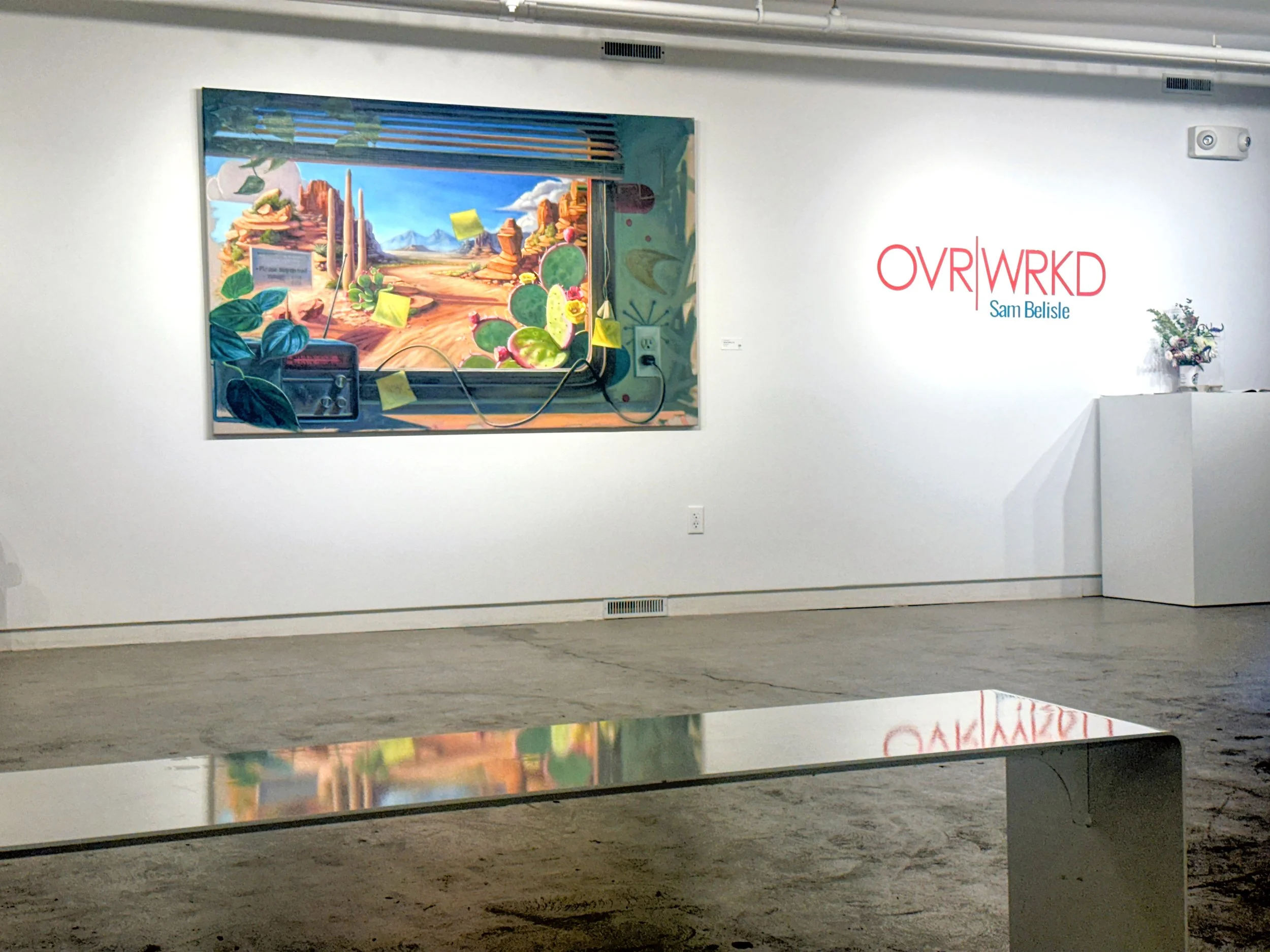
“Remote Working”, Oil on linen, 2026
OVR|WRKD
In his first premier solo exhibition, Sam Belisle continues the enduring tradition of documenting the everyday experience of working-class citizens through moments of work and leisure. OVR|WRKD is a collection of 13 large-scale oil paintings depicting banal micronarratives that center moments of respite from the chaos of living and working within the Digital Anthropocene. The title of the exhibition attempts to describe a lasting feeling of mental fatigue and anxiety that seems inherent to a society where identities are monetized, attention is colonized, and lived experience is replaced by the referential. The duality of modern life is not-so-slowly reducing personal experience to a cycle between work in the analog and leisure in the digital, with no clear understanding of the consequences of such a shift.
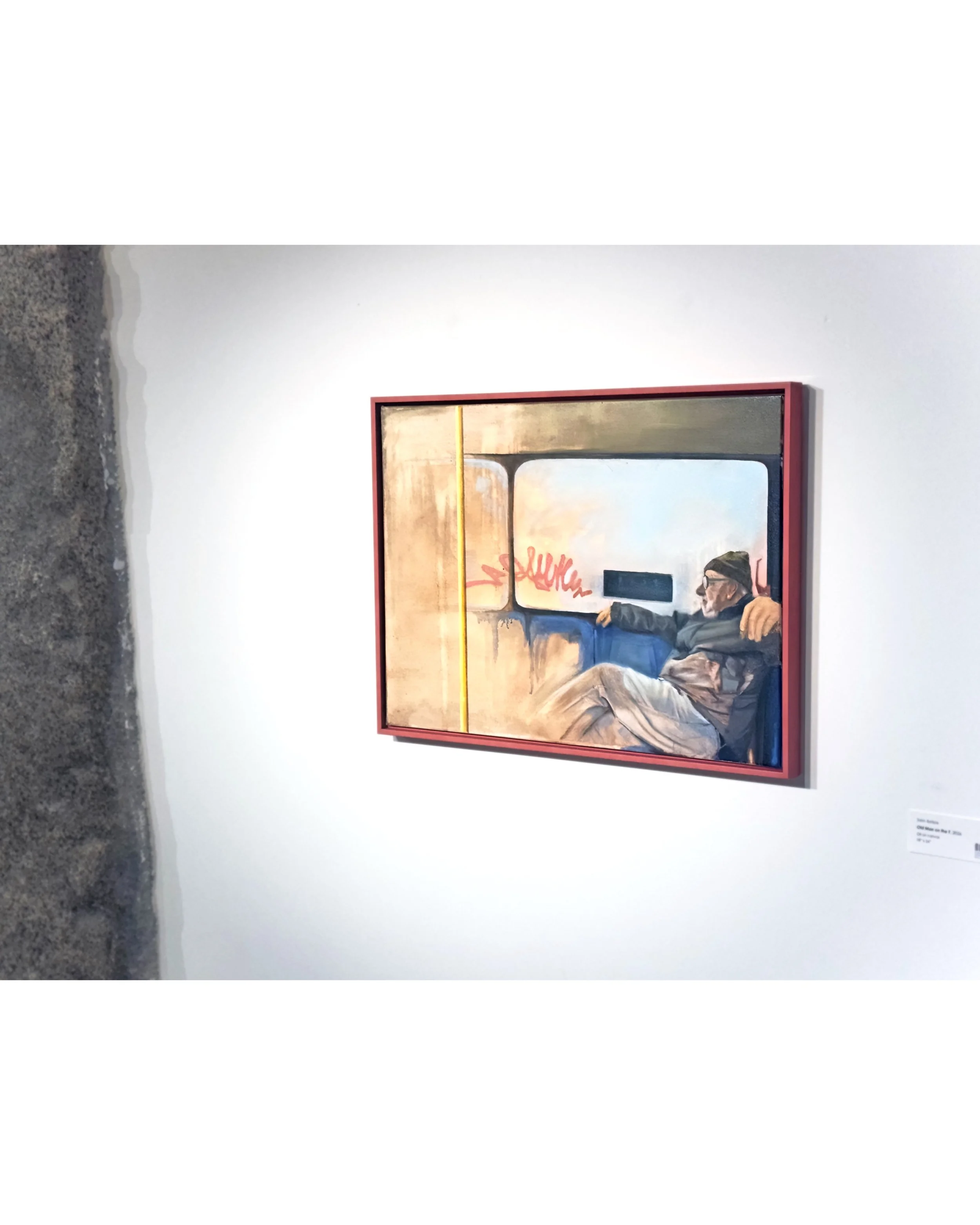
“Old Man on the T”, Oil on canvas, 2026
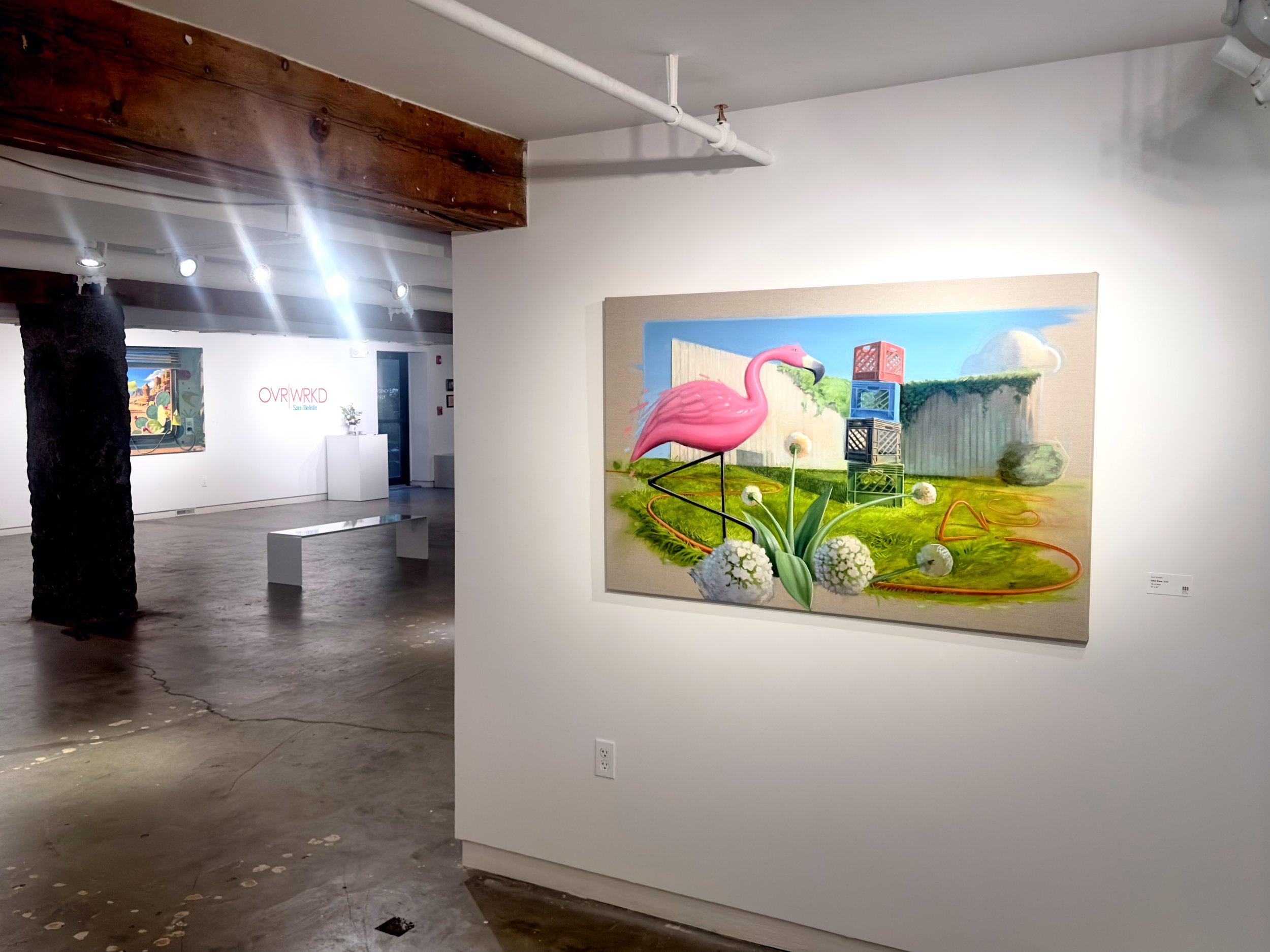
“Lawn-Care”, Oil on linen, 2026
Belisle’s paintings are heavily influenced by different canonical tropes of art history. By utilizing traditions from notable art movements — the sublime/picturesque, the tableau, and depictions of work and leisure — he hopes to create a contrast between the values and expectations for life held in the documented past and those we serve today. The visual narratives in his paintings implicate the viewer an encourages the self-reflection of their own experiences. This is achieved using visual metaphors, embedding repetitive symbols, and employing the use of scale and linear perspective.
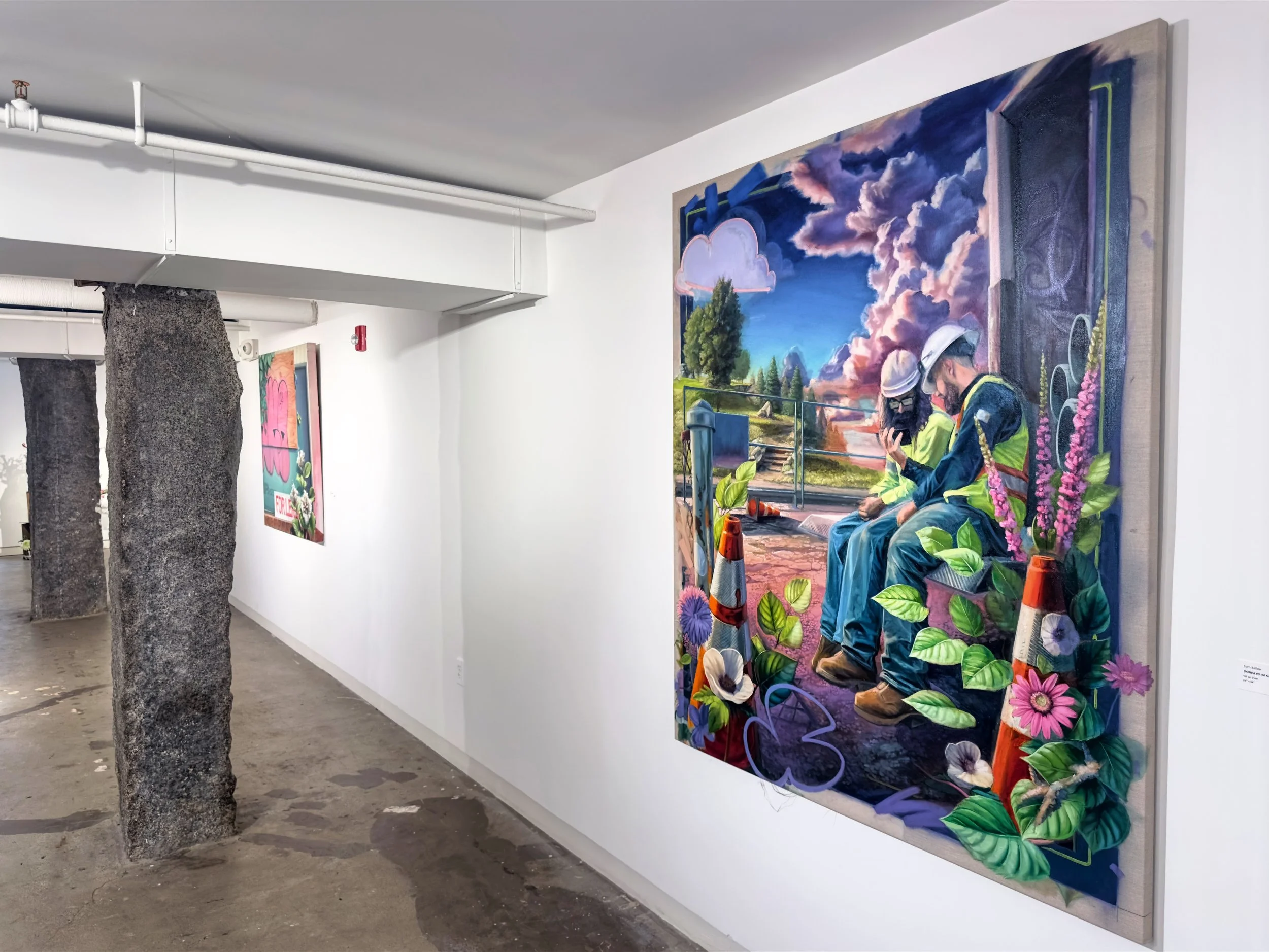
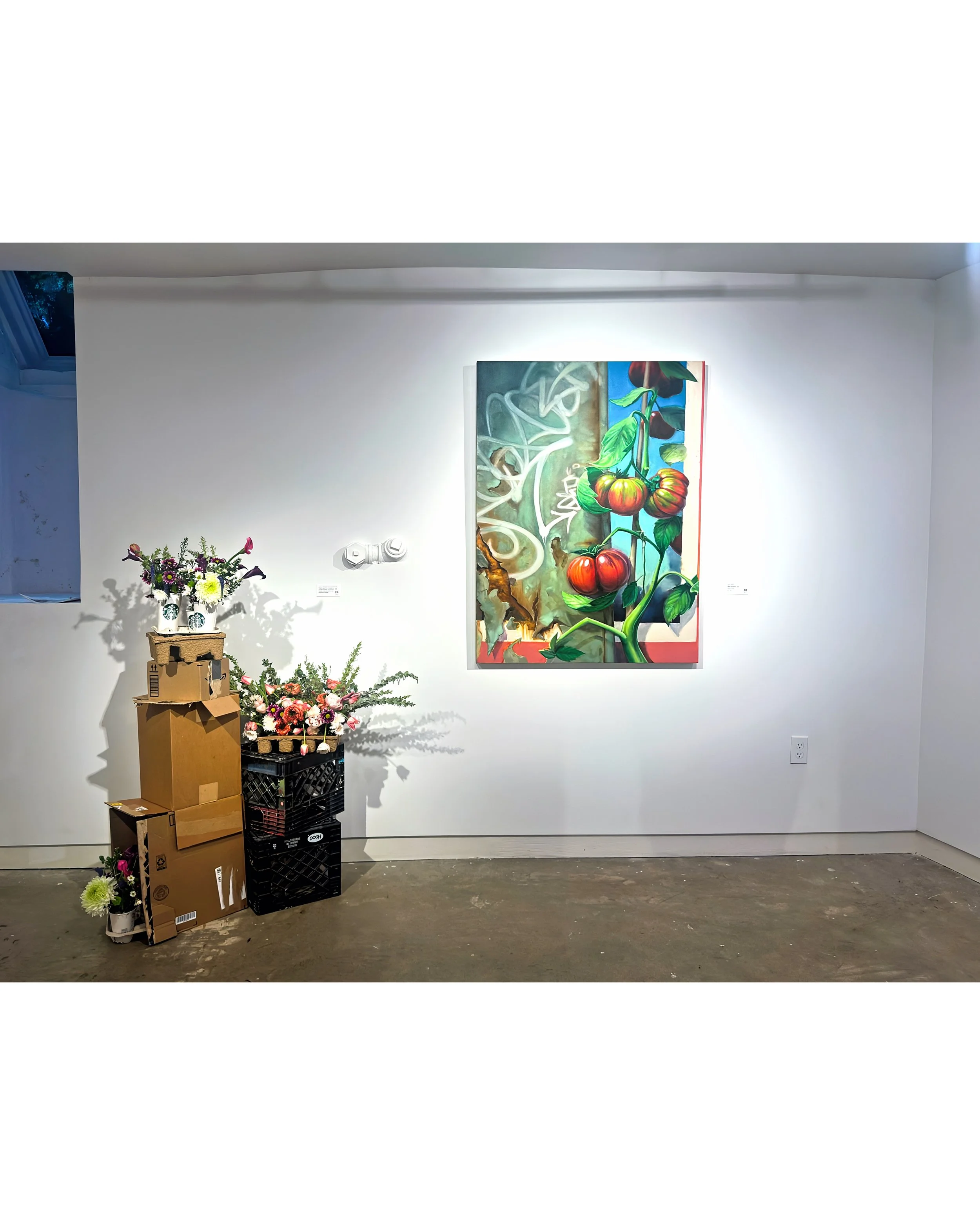
The juxtaposition of idyllic natural landscape and urban space is a repeating motif in this body of work. His landscapes reference the sublime — a concept that bridged Enlightenment inquiry and Romantism’s emphasis on subjectivity, emotion, and nature as investigated by philosophers like Edmund Burke and Immanuel Kant, as well as artists like Thomas Cole from the Hudson River School — while chaotic urban narratives reveal how opportunities to experience the sublime in daily life have become increasingly unavailable. Instead, we are sold counterfeit versions in the form tourism or digital representation, completely void of the vastness, beauty, logic, and personal understanding inherent to an authentic experience of the sublime. Through such comparisons, Belisle confronts the apathy through which we engage the natural world and uses that relationship as point of departure to discuss what else is traded and denied when ethics and methodologies shaped by technology and commerce go unexamined. In a way, the landscape becomes a metaphor for loss.